The best AI HR tools aren’t just for recruiting anymore
By Fara Rosenzweig June 15, 2026
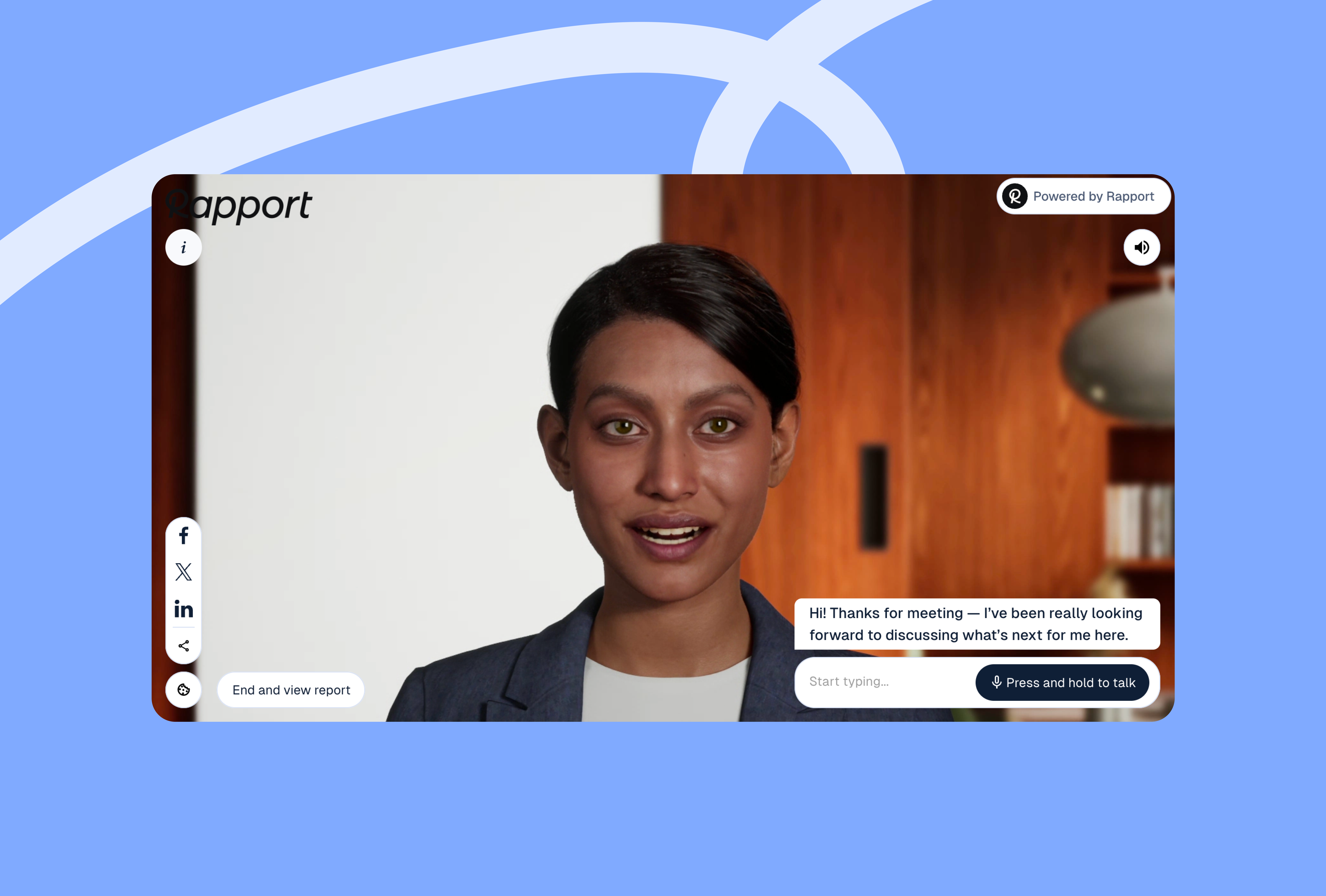
For years, conversations around AI in HR focused almost entirely on recruiting.
Resume screening. Interview scheduling. Candidate sourcing. Automated workflows.
And while those use cases still matter, they represent only a small part of how AI is reshaping the employee experience.
Forward-thinking HR and Learning & Development (L&D) teams are using AI far beyond talent acquisition. The newest generation of AI HR tools is helping organizations improve onboarding, scale employee coaching, personalize learning, and create more engaging workplace training experiences.
One of the biggest shifts is the rise of conversational AI and AI avatars for employee training and onboarding.
AI in HR has moved beyond administrative automation
The first wave of AI HR software focused heavily on operational efficiency:
automating repetitive tasks
improving recruiting workflows
accelerating HR support
streamlining documentation
But HR leaders are now facing a different challenge. How do you create scalable, engaging, and human-centered employee experiences in hybrid and global workplaces?
Traditional training methods often struggle to keep up with:
distributed teams
growing onboarding demands
leadership development needs
communication and soft skills training
rising employee expectations for personalized learning
Static LMS modules and one-way onboarding videos can only go so far. Employees increasingly want learning experiences that feel interactive, adaptive, and realistic. That’s where conversational AI is beginning to transform HR.
The next evolution of HR AI: Interactive employee learning
Modern AI HR tools are increasingly being used to support:
employee onboarding
leadership coaching
communication skills development
customer conversation practice
compliance training
workplace simulations
roleplay-based learning
Instead of simply consuming content, employees can actively participate in realistic conversations and training scenarios.
This shift matters because practice-based learning tends to drive stronger engagement and retention than passive training alone.
For HR and L&D teams, it also creates opportunities to scale personalized coaching and training experiences across large organizations without dramatically increasing facilitator resources.
Give one of Rapport's role plays a try.

Why traditional employee training often falls short
Many workplace training experiences still rely on:
slide decks
recorded webinars
static eLearning modules
generic onboarding videos
While these approaches can deliver information, they often lack interaction and real-world practice.
That creates several common challenges:
low engagement
inconsistent onboarding experiences
limited knowledge retention
lack of feedback opportunities
minimal hands-on communication practice
This is especially true for soft skills training, where employees benefit from repetition, conversation, and situational learning.
Skills like:
leadership
empathy
conflict resolution
customer communication
interviewing
coaching
sales conversations
are difficult to develop through passive content alone.
How AI avatars are changing employee onboarding and training
AI avatars are emerging as a powerful new category within HR technology because they make training more interactive and conversational.
Instead of watching a pre-recorded onboarding session or reading through static content, employees can engage directly with AI-powered digital humans in realistic scenarios.
These conversational experiences can support:
new hire onboarding
manager training
customer service coaching
workplace communication practice
compliance simulations
leadership development
roleplay exercises
Because the interaction is dynamic, employees can practice responses, build confidence, and learn through conversation rather than observation alone.
This creates a more immersive and scalable learning environment for modern organizations.
Conversational AI for HR and L&D teams
Rapport helps organizations create conversational AI avatars for employee onboarding, roleplay simulations, coaching, and learning experiences.
Unlike traditional training tools that rely primarily on one-way content delivery, conversational avatars enable employees to participate in interactive dialogues designed to simulate real workplace conversations.
Organizations can use AI avatars to support:
onboarding and orientation
communication training
customer support practice
leadership development
sales enablement
soft skills coaching
multilingual training experiences
scenario-based learning
For distributed teams and global organizations, conversational AI can also help create more consistent learning experiences at scale while still feeling personalized and engaging.
Subscribe to our newsletter
Keep updated with Rapport and receive blog posts direct to your inbox
The growing role of AI in employee engagement
As HR technology evolves, the focus is shifting from pure automation toward employee enablement.
The most impactful AI HR tools are no longer just helping HR teams save time. They’re helping organizations:
improve learning outcomes
increase employee confidence
deliver more personalized support
create scalable coaching experiences
build stronger workplace communication skills
This is especially important as companies continue navigating hybrid work, global teams, and rapidly changing skill requirements.
AI-powered learning experiences can help organizations adapt faster while creating more engaging employee journeys.
AI HR tool categories at a glance
Different AI HR tools solve different problems. Here is how the main categories compare:
Category | Primary use | Best for |
|---|---|---|
Recruiting automation | Resume screening, scheduling, and sourcing | Talent acquisition teams |
Onboarding and orientation | Guided new-hire setup and early ramp-up | HR operations and people teams |
LMS and eLearning | Delivering courses and static modules | Compliance and baseline knowledge |
Conversational AI and AI avatars | Interactive roleplay and conversation practice | Soft skills, coaching, and L&D |
Employee engagement | Personalized support and coaching at scale | HR leaders and hybrid teams |
What to look for in modern AI HR tools
As organizations evaluate AI for HR and L&D, several capabilities are becoming increasingly important. Use this checklist when comparing tools:
Interactivity: employees learn more effectively when they actively participate rather than passively consume information.
Scalability: delivers consistent training experiences across teams, regions, and time zones.
Personalization: adapts to individual employee needs and communication styles.
Conversation-based learning: builds communication and leadership skills through practice and repetition.
Realistic simulations: scenario-based practice helps employees build confidence before real-world interactions.
The future of AI in HR
Recruiting will continue to be an important AI use case in HR.
But the future of HR AI is expanding far beyond hiring workflows.
Organizations are increasingly exploring how conversational AI, AI avatars, and interactive simulations can improve onboarding, training, coaching, and employee development at scale.
As employee expectations evolve, HR leaders are looking for tools that create more human, engaging, and effective workplace learning experiences.
And conversational AI is quickly becoming one of the most promising categories leading that transformation.
FAQs about AI HR tools
What are AI HR tools?
AI HR tools use artificial intelligence to help organizations improve recruiting, onboarding, employee support, training, and workforce operations. Modern AI HR software can automate tasks, personalize employee experiences, and deliver interactive learning environments.
How are companies using AI for employee onboarding?
Organizations are increasingly using AI to create personalized onboarding experiences, automate employee support, and deliver interactive training. Conversational AI avatars can guide new hires through onboarding processes and simulate real workplace interactions.
What are AI avatars in HR?
AI avatars are digital humans powered by conversational AI that can interact with employees in real time. HR and L&D teams use AI avatars for onboarding, roleplay training, leadership coaching, and communication skills development.
Can conversational AI improve employee training?
Conversational AI can make workplace learning more engaging by allowing employees to practice real conversations and receive immediate feedback in simulated environments. This supports stronger participation, confidence-building, and knowledge retention.
What industries use AI avatars for training?
AI avatars are being used across industries including customer service, healthcare, retail, financial services, education, hospitality, and enterprise learning environments where communication and soft skills training are important.

Fara Rosenzweig, VP of Marketing
Fara Rosenzweig is the VP of Marketing at Rapport.
Related articles

What your LMS can’t show you about soft skills
Completion rates tell you someone clicked through a module, not whether they can handle a difficult customer. Here's how to measure real behavior change with scenario-based practice and reporting that stands up to a CFO's questions.
How to write a strong prompt for your AI avatar
Your avatar is only as good as the brief you give it, and vague prompts produce vague conversations. Here's how to set the scene with context, tone, and purpose so your avatar can think on its feet instead of reading a script.

The science of engaging soft skills training
You can't learn to swim by reading about water, and you can't learn hard conversations by watching a video. This is the learning science behind why passive training fails and what makes experiential practice actually stick.