Simulation-Based Training: What It Is and Why It Works
Simulation-based training lets people practice real tasks in a safe, realistic setting before the stakes are real. Here is how it works, what the research says, and how to use it for conversations as well as technical skills.
November 20, 2026
Key takeaways
- Simulation-based training lets people practice real tasks in a safe, realistic setting. Mistakes cost nothing, and feedback comes right away.
- It is proven in high-stakes fields. Aviation and healthcare have used simulation for decades, and research links it to large gains in knowledge, skills, and behavior.
- It now works for conversations, too. AI role-play lets people simulate sales calls, feedback talks, and patient conversations with lifelike AI characters.
- The debrief is where learning happens. Every simulation needs clear goals, scored behaviors, and a review afterward.
- Start small. Pick one high-risk moment, build one scenario, and measure the change.
What is simulation-based training?
Simulation-based training is a way of learning by doing a realistic version of a real task. Instead of reading about a situation, learners step into it, make decisions, and see the results. The setting is safe, so mistakes become lessons instead of costly errors.
A flight simulator is the classic example. Pilots practice engine failures and bad weather without leaving the ground. The same idea now powers training for surgeons, nurses, sales reps, managers, and customer service teams.
Good simulation training has three parts. There is a realistic scenario, a way to measure performance, and a debrief that turns the experience into learning.
Types of simulation-based training
Simulations range from simple paper scenarios to full-motion flight decks. The right type depends on the skill you need to build.
| Type | What it trains | Example | Cost to scale |
|---|---|---|---|
| Physical and equipment simulators | Hands-on technical skills | Flight simulators, patient manikins | High |
| Virtual reality (VR) | Spatial tasks and immersive scenarios | Safety drills, equipment walk-throughs | Medium to high |
| Screen-based simulation | Decisions and processes | Software training, business games | Low to medium |
| Live role-play with actors | Conversations and soft skills | Standardized patients, mock negotiations | High |
| AI conversation simulation | Conversations and soft skills | AI role-play with lifelike avatars | Low |
Live actors are realistic, but hard to schedule and expensive to scale. That is why many teams now use AI for conversation practice. We compare the two in AI role-play vs. actor role-play.
Does simulation-based training work?
Simulation has some of the strongest evidence in all of training research, especially in healthcare. A landmark review in JAMA looked at more than 600 studies of technology-enhanced simulation for health professionals. It found that, compared with no intervention, simulation is consistently linked to large effects on knowledge, skills, and behaviors, and moderate effects on patient outcomes.
Newer research agrees. A 2023 meta-analysis of 59 randomized trials found that digital simulation had a positive overall effect compared with traditional teaching for physicians and nurses. The same paper notes that high-quality simulation could replace up to 50% of traditional clinical hours in prelicensure nursing programs.
Aviation trusts simulation even more. Under FAA rules for airline training, qualified simulators can be used for up to 100% of required training, testing, and checking, depending on the simulator's level.
Simulation for soft skills and conversations
For years, simulation meant equipment and procedures. Now it works for conversations, too. Sales calls, feedback talks, and difficult customer moments can all be simulated, and the results are strong.
In PwC's large study of immersive soft skills training for new managers, learners in the simulated course trained up to four times faster than classroom learners. They also felt 3.75 times more emotionally connected to the content and were up to 275% more confident acting on what they learned.
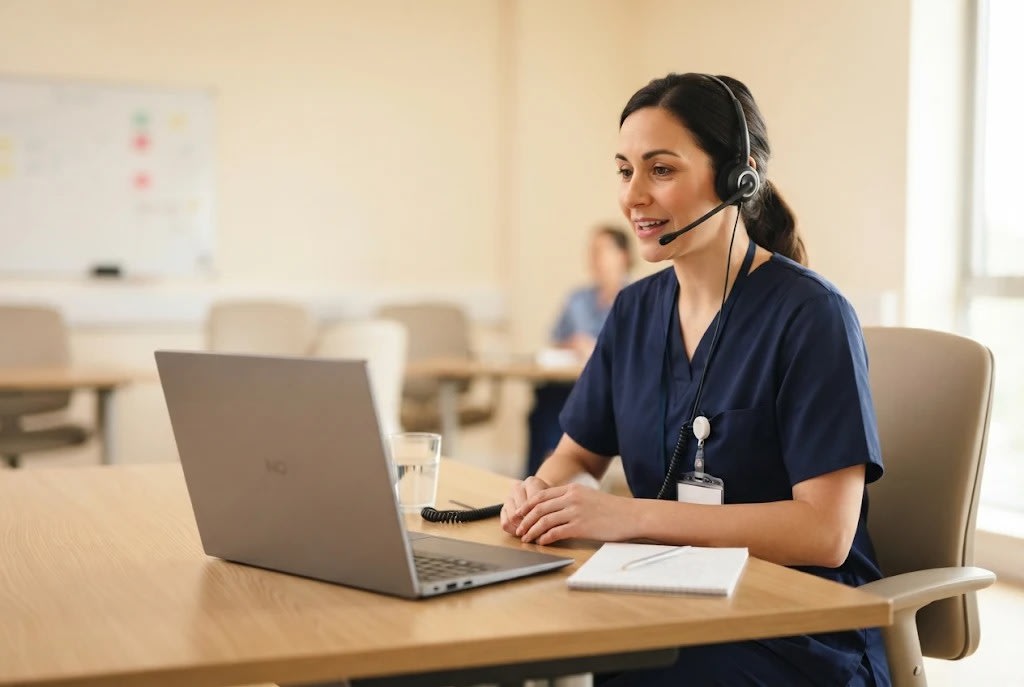
PwC's study used VR headsets. AI conversation simulation brings the same idea to a laptop or phone, with no headset needed. Learners talk out loud with a lifelike AI character who reacts in real time, then get feedback on how they did. Learn more in our guide to AI role-play training.
5 benefits of simulation-based training
Teams choose simulation-based training for the same handful of reasons, whatever the industry.
- Safe mistakes. People can fail, learn, and try again without hurting a patient, losing a deal, or upsetting a customer.
- Practice on demand. Rare but critical moments, like an angry customer or an emergency, can be practiced any time.
- Consistent standards. Every learner faces the same scenario and is scored against the same rubric.
- Clear proof of readiness. Scores show who is ready before the real moment. See how to measure training readiness.
- Better retention. Learning by doing sticks better than reading or watching, as covered in the power of immersive learning.
How to design simulation-based training
A simulation is only as good as its design. Use this five-step loop for any type, from a flight deck to an AI conversation.
Tips for each step
- Start with a high-risk moment. Pick the situation where a mistake costs the most, such as a pricing objection or delivering bad news.
- Match realism to the goal. Conversation skills need a partner who reacts with voice and expression, not a multiple-choice quiz.
- Score what people do, not what they know. Our guide to observable behavior feedback shows how to write behaviors you can score.
- Never skip the debrief. Reflection turns a practice run into learning. Even five minutes with a coach helps.
For a full walkthrough of building a conversation scenario, read how to design an AI role-play scenario.

Simulation-based training examples by industry
Simulation-based training looks different in every field. Here is how it shows up across industries today.
| Industry | What teams simulate | Learn more |
|---|---|---|
| Healthcare education | Patient conversations, clinical decisions | Clinical skills training |
| Pharma and life sciences | Physician detailing and launch messaging | Pharma sales scenarios |
| Sales | Discovery, demos, and objections | Sales simulation |
| Leadership | Feedback, performance reviews, conflict | AI leadership simulation |
| Negotiation | Pricing, terms, and pushback | Negotiation simulator training |
| Customer service | Upset customers and escalations | De-escalation training |
Frequently asked questions
What is simulation-based training?
Simulation-based training is learning by doing a realistic version of a real task in a safe setting. Learners make decisions, see the results, and review their performance in a debrief. It is used in aviation, healthcare, sales, leadership, and customer service.
What are examples of simulation-based training?
Common examples include flight simulators for pilots, patient manikins for nurses, VR safety drills, business simulation games, and AI role-play where people practice conversations with lifelike AI characters.
Is simulation-based training effective?
Yes. A review of more than 600 studies in JAMA found that simulation is consistently linked to large effects on knowledge, skills, and behaviors compared with no training, and moderate effects on patient outcomes.
What is the difference between simulation training and role-play?
Role-play is one type of simulation focused on conversations. Simulation training is the broader category and also includes equipment, procedures, and decision-making scenarios.
How do you design simulation-based training?
Set one clear goal, write a realistic scenario, choose three to five behaviors to score, let learners practice and retry, and finish with a debrief that reviews what to change.
Simulate real conversations with Rapport
Bring simulation-based training to every conversation. Rapport lets your people practice sales calls, feedback talks, and patient conversations with lifelike AI avatars that react in real time, with scored feedback after every attempt. No headsets, actors, or scheduling needed.
Book a demo Start a free trial