How AI Sales Simulation Improves Performance
AI sales simulation gives reps a realistic buyer to practice against before a real call. Reps rehearse discovery, objections, and pricing talks as often as they need. The payoff shows up in ramp time, confidence, and win rates, not course completions.
By Fara Rosenzweig July 8, 2026
Key takeaways
- AI sales simulation is a practice environment where reps talk to a realistic AI buyer and get instant feedback before live calls.
- Traditional training teaches reps what to say but rarely gives them enough chances to say it under pressure.
- SDRs take about 3 months to ramp and stay about 1.9 years on average, so slow ramp eats a big share of every hire's value.
- 67% of B2B buyers now prefer a rep-free buying experience, so every live conversation has to count.
- Simulation fills the "before the call" gap that call recording and conversation intelligence tools leave open.
- Top use cases: onboarding, objection handling, messaging alignment, enterprise readiness, discovery, and product launches.
Why traditional sales training falls short
Most sales training still runs on a familiar mix:
- Playbooks and documentation
- One-time onboarding sessions
- Shadowing top performers
- Occasional manager-led roleplays
None of these methods is wrong. The problem is that none of them scales repetition, and repetition is what turns knowledge into skill.
The forgetting curve works against one-time training
Memory research going back to Hermann Ebbinghaus shows people lose most new information within days unless they use it. A 2015 replication of his forgetting curve study confirmed the same steep early drop. A two-day bootcamp with no follow-up practice fights that curve and usually loses.
What happens when reps do not practice enough
- They understand the messaging but struggle to use it live
- They freeze when an objection catches them off guard
- They fall back on scripts instead of adapting to the buyer
- They take months to feel confident on real calls
This gap between training and performance stays hidden until reps are already in front of customers. By then, the cost is a lost deal, not a coaching note.
The Bridge Group's 2025 report puts average SDR ramp at 3.0 months and average tenure at 1.9 years. Want to see what slow ramp costs your team? Run your numbers in our sales ramp time calculator.
What is AI sales simulation?
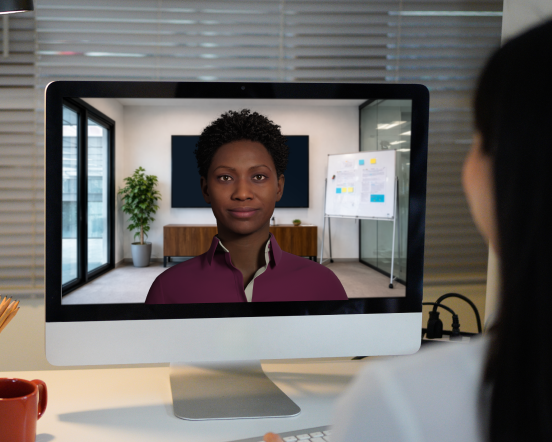
AI sales simulation is a practice environment where sales reps hold realistic conversations with an AI buyer before they talk to real customers. The AI plays a specific persona, raises objections, and reacts to what the rep says. Reps get feedback right after each session, so they can try again right away.
It shifts training from watching to doing. Instead of reading about a tough conversation, reps practice it in interactive roleplay.
What reps can practice
- Discovery calls, as many times as they need
- Live objections on pricing, timing, and competitors
- Different messaging approaches to see what lands
- Executive conversations before the real meeting
- New talk tracks after a product launch
AI sales simulation vs. manager-led roleplay
| Manager-led roleplay | AI sales simulation | |
|---|---|---|
| Availability | When a manager has time | Anytime, on demand |
| Repetition | One or two runs | As many runs as the rep needs |
| Consistency | Varies by manager | Same scenario and rubric for every rep |
| Realism | Rep knows the "buyer" | Buyer reacts like a stranger would |
| Feedback | Subjective and often delayed | Instant and tied to a rubric |
Manager roleplay still matters for coaching judgment and deal strategy. Simulation handles the volume, so manager time goes further. For a deeper look, read AI role play training: what it is and why it beats passive e-learning.
3 ways simulation improves sales performance
1. Repetition builds confidence under pressure
Sales conversations are unpredictable. Even experienced reps stumble when a buyer changes direction mid-call. Simulation lets reps hit those moments again and again until the response feels natural, not scripted.
2. Faster feedback speeds up learning
Traditional coaching happens after a live call, when the moment has already passed. AI simulation gives feedback during practice, so reps fix mistakes before a buyer ever sees them. Short loops of try, feedback, and retry build skill faster than one long review.
3. More scenarios than real life can provide
New reps only see a narrow slice of conversations in their first months. Simulation widens that range:
- Different buyer personalities
- Different objection types
- Different deal stages
- Different industries and use cases
What the research says about practice-based learning
PwC's 2020 study of immersive soft skills training found learners finished up to 4x faster than classroom learners. They also felt up to 275% more confident acting on what they learned. The study used VR headsets, but the lesson carries over: practice that feels real builds skill faster than content people only watch or read.
Where AI roleplay fits in the modern sales tech stack
AI simulation does not replace sales coaching, call recording, or conversation intelligence tools. It fills the gap in front of them.
| Stage | What happens | Typical tools |
|---|---|---|
| Before the call | Practice and rehearsal | AI sales simulation and roleplay |
| During the call | Execution and customer engagement | CRM, dialers, and meeting tools |
| After the call | Review, coaching, and performance tracking | Call recording and conversation intelligence |
Most teams are already strong after the call. They can review recordings, spot coaching moments, and track metrics. What has been missing is a scalable way to practice before the conversation happens.
AI roleplay gives reps a safe place to rehearse discovery calls, objection handling, competitive positioning, and hard customer conversations. Reps who practice, get feedback, and refine their approach show up to real calls more ready, confident, and consistent.
6 common use cases for AI sales simulation
Teams use AI sales simulation to build confidence and prepare reps for real conversations before the stakes are high.
1. Onboarding and ramp
New hires practice realistic scenarios before they talk to prospects. They learn the messaging, the process, and the common questions in a safe setting. That builds confidence for early calls and can shorten ramp time.
2. Objection handling
Reps work through pricing, competitor, budget, and timing objections until their answers sound natural. They meet tough moments in practice first, not on a live call.
Want a ready-made drill? Try our objection handling roleplay or read our guide to AI objection handling training.
3. Messaging alignment
Simulation helps the whole team tell the same company story. Reps practice adapting the pitch to different buyer personas while keeping the value proposition and differentiators consistent.
4. Enterprise readiness
Enterprise deals bring more stakeholders, competing priorities, and tougher questions from senior leaders. Reps can rehearse executive conversations before they face real decision-makers. Selling into healthcare? Start with the 4 people in every med device deal.
5. Discovery and qualification
Teams practice asking sharper questions, uncovering real pain points, and guiding the conversation. That makes it easier to qualify deals and gather what they need to move them forward.
6. Product launches
When a new product, feature, or message rolls out, simulation gets the whole team ready at once. Reps practice the new talk track before they take it to market, so the launch sounds consistent from day one.
Why sales readiness is a competitive advantage
Deals are often won or lost on the quality of the conversation, not the quality of the product. The buying environment makes that truer every year:
- Buyers are more informed before they ever talk to sales
- Deal cycles involve more stakeholders
- Competitive differentiation is harder to show
- Messaging consistency matters more than ever
Gartner's 2026 survey of 646 B2B buyers found 67% prefer a rep-free experience, up from 61% the year before. Gartner also found confident buyers are twice as likely to report a high-quality deal. When buyers do bring in a rep, that rep has to add real value fast.
In that environment, learning on the job is no longer enough. Teams need a way to practice before performance, not just analyze it afterward.
How to measure the impact of AI sales simulation
Completions and logins do not prove readiness. Track the metrics that connect practice to revenue.
| Metric | What it tells you | Where to find it |
|---|---|---|
| Ramp time | How fast new hires become productive | CRM and sales ops data |
| Scenario scores over time | Whether skills improve with practice | Simulation platform reports |
| Practice volume per rep | Who is actually rehearsing | Simulation platform reports |
| Objection-stage conversion | Whether objection practice shows up in deals | CRM stage data |
| Quota attainment by cohort | Business impact of the program | Sales ops dashboards |
The cleanest test is simple: compare a cohort that practices with simulation against one that does not. For a full framework, read completion rates are not readiness and what your LMS can't show you about soft skills.
Frequently asked questions about AI sales simulation
What is AI sales simulation?
AI sales simulation is software that lets sales reps practice real conversations with an AI-powered buyer. The AI plays a persona, raises objections, and gives feedback, so reps build skill before live calls.
How does AI sales simulation improve sales performance?
It gives reps far more practice than live calls or manager roleplay can. Repetition builds confidence, instant feedback speeds up learning, and varied scenarios prepare reps for conversations they have not seen yet.
Does AI roleplay replace sales managers?
No. Simulation handles high-volume practice so managers can spend their time on coaching, deal strategy, and judgment calls.
Is AI sales simulation only for new hires?
No. Onboarding is a strong place to start, but experienced reps also use simulation to prepare for big meetings, learn new products, and sharpen objection handling.
What scenarios should sales teams practice first?
Start with the conversations that cost the most deals: discovery calls, pricing objections, and competitor comparisons. Add executive meetings and product launch talk tracks next.
How do you measure the ROI of AI sales simulation?
Track ramp time, scenario scores over time, practice volume, objection-stage conversion, and quota attainment. Compare a practicing cohort against a baseline cohort to see the lift.
The future of sales training is practice-driven
The biggest change in sales enablement is not automation. It is the shift from passive learning to active practice.
Playbooks, courses, and recorded calls still matter. But knowledge alone does not prepare someone for a live customer conversation. Top-performing teams give reps room to rehearse discovery, work through objections, and refine their message before the stakes are real.
Sales readiness is not built by watching. It is built by practicing. See it for yourself in our interactive AI roleplay demo.

Fara Rosenzweig, VP of Marketing
Fara Rosenzweig is the VP of Marketing at Rapport.
Related articles

What your LMS can’t show you about soft skills
Completion rates tell you someone clicked through a module, not whether they can handle a difficult customer. Here's how to measure real behavior change with scenario-based practice and reporting that stands up to a CFO's questions.
How to write a strong prompt for your AI avatar
Your avatar is only as good as the brief you give it, and vague prompts produce vague conversations. Here's how to set the scene with context, tone, and purpose so your avatar can think on its feet instead of reading a script.

The science of engaging soft skills training
You can't learn to swim by reading about water, and you can't learn hard conversations by watching a video. This is the learning science behind why passive training fails and what makes experiential practice actually stick.