Remote Sales Training: How Distributed Teams Build Real Selling Skills
Remote sales training is the set of programs, tools, and coaching routines that build selling skills for reps who do not share an office with their manager or peers.
October 11, 2026
Remote Sales Training: How Distributed Teams Build Real Selling Skills
Key takeaways
- 61% of B2B buyers prefer a rep-free buying experience (Gartner, 2025), so the conversations reps do get carry more weight.
- McKinsey finds B2B buyers split roughly into thirds between in-person, remote, and self-serve at every stage, using about 10 channels.
- Companies with consistent sales coaching see 32% higher win rates and 28% higher quota attainment (Korn Ferry).
- New account executives take 6.2 months to ramp, and only 48% hit annual quota (Bridge Group, 2026).
- The biggest remote training gap is practice. AI roleplay gives distributed reps realistic, scored reps without waiting for a manager's calendar.
How B2B buying went remote
Remote sales training matters because buyers changed first. Most research now describes a hybrid buyer who moves between digital, remote, and in-person channels.
- The rule of thirds. McKinsey's B2B Pulse found buyers split roughly evenly between in-person, remote, and digital self-serve at every buying stage, and now use an average of 10 channels (McKinsey, 2024).
- Big deals happen remotely. 71% of buyers say they would spend more than $50,000 through remote or self-service channels (McKinsey, 2022).
- Hybrid sellers reach more accounts. McKinsey estimates remote reps can cover about 4x as many accounts, and hybrid sales can drive up to 50% more revenue.
When buyers spend less time with sellers, every live conversation has to count. That is a skills problem, and it is the problem remote sales training has to solve.
Why skills gaps grow faster in remote teams
In an office, new reps learn by overhearing calls, getting quick feedback in the hallway, and joining a senior rep's meeting. Remote teams lose most of that informal learning.
of reps missed quota in the prior year (Salesforce, 2024).
of a seller's time is spent actually selling (Salesforce, 2026).
of Gen Z sellers say they don't get enough roleplay before customer calls (Salesforce, 2026).
average AE ramp time, the longest in Bridge Group's research history (Bridge Group, 2026).
- Less observation. Managers rarely hear live calls, so coaching relies on self-reporting.
- Less practice. Scheduling a roleplay across time zones takes effort, so it gets skipped.
- Slower feedback. Mistakes repeat for weeks before anyone notices.
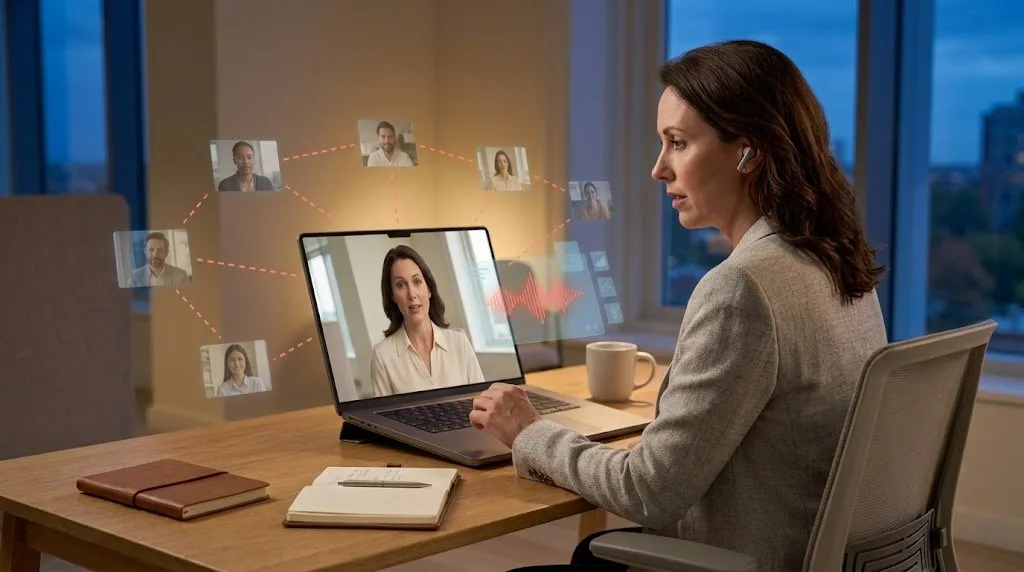
The five parts of a remote sales training program
Strong remote sales training programs combine five parts. Most teams already have the first two. The gaps are usually in practice, coaching, and measurement.
| Part | What it covers | Remote-friendly format |
|---|---|---|
| 1. Knowledge | Product, market, ICP, and methodology | Short on-demand modules in your LMS |
| 2. Live learning | Frameworks, call reviews, and peer discussion | Virtual workshops in small cohorts |
| 3. Practice | Saying it out loud: discovery, objections, demos, negotiation | AI roleplay on demand, plus peer roleplay |
| 4. Coaching | Individual feedback on practice and real calls | Scheduled 1:1s using roleplay scorecards and call recordings |
| 5. Measurement | Readiness, ramp time, and win rates | Readiness reports by rep and cohort |
Sales training budgets are real money. ATD's research put average spend at $1,459 per salesperson per year (ATD, 2016), so it pays to fund the parts that change behavior.
Why coaching and practice matter most
Knowledge without practice fades quickly. Coaching and practice are where remote programs earn their return.
The challenge in remote teams is manager time. AI roleplay helps by letting reps practice independently, so manager 1:1s can focus on reviewing scorecards and coaching specific behaviors instead of running every roleplay live. See AI roleplay vs. manager roleplay for how the two work together.
Remote sales training tools by job
- Learning management system (LMS): hosts knowledge modules and tracks completion. Choose AI roleplay that plugs into it, as covered in AI roleplay LMS integration.
- Video meeting tools: run live workshops and peer roleplays.
- Conversation intelligence: records and analyzes real calls for coaching.
- AI roleplay: gives reps unlimited realistic practice with scored feedback. Compare options in the best AI roleplay platforms.
- Sales coaching platforms: organize coaching plans and readiness data. See AI sales coaching tools.
Training Magazine's 2025 Training Industry Report found 61% of organizations already deliver at least some sales training online (Training Magazine). The difference between programs is whether online means watching or practicing.
A 30-day plan to launch remote sales training
- Week 1: Pick the moments. Choose three high-impact conversations, such as discovery, objection handling, and pricing.
- Week 2: Build the scenarios. Turn real deals into AI roleplay personas with clear scoring criteria. Use our guide to designing an AI roleplay scenario.
- Week 3: Launch and practice. Ask every rep to complete two scored roleplays per scenario. Keep sessions short.
- Week 4: Coach and measure. Review scorecards in 1:1s, then compare readiness by rep and team. See sales team skill gap analysis.
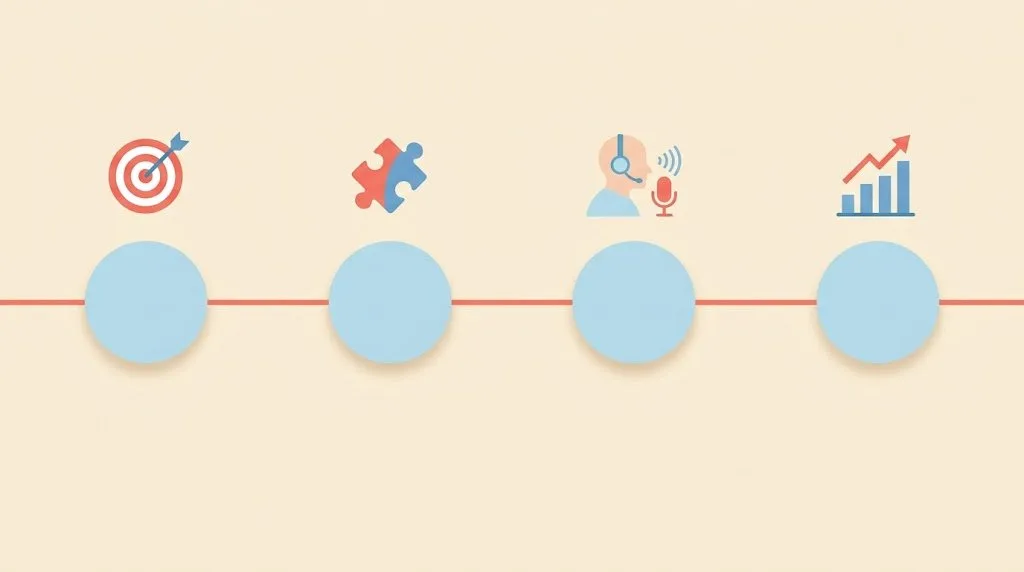
How to measure remote sales training
- Readiness scores: roleplay results against defined behaviors, tracked over time
- Practice volume: roleplays completed per rep per week
- Ramp time: time to first deal and time to full quota for new hires
- Conversion rates: stage-to-stage conversion before and after training
- Win rate and quota attainment: the outcomes coaching research ties to consistent practice
For a deeper framework, read measuring training readiness.
Where Rapport fits
Rapport gives distributed sales teams realistic, face-to-face practice without scheduling a roleplay partner.
- Lifelike, emotionally responsive AI avatars that react to what reps say and how they say it
- Custom scenarios and scoring built on your methodology, products, and buyers
- A scorecard and readiness report after every roleplay, with team-level gap analysis
- Delivery through your LMS via SCORM, a browser, or Rapport, in 50+ languages
Try the discovery call roleplay or the objection handling roleplay now, no sign-up required.
Frequently asked questions
What is remote sales training?
Remote sales training is the programs, tools, and coaching that build selling skills for reps who work from home or in distributed teams. Effective programs include knowledge, live learning, practice, coaching, and measurement.
How do you train a remote sales team effectively?
Combine short on-demand modules with virtual workshops, give reps regular scored practice through AI roleplay, use scorecards to guide manager 1:1s, and track readiness and ramp time.
What are the best tools for remote sales training?
Most teams combine an LMS, video meeting tools, conversation intelligence, AI roleplay, and a coaching platform. AI roleplay fills the practice gap that distributed teams struggle with most.
How can managers coach remote reps without listening to every call?
Have reps complete AI roleplays and review the scorecards together. Pair that with a small sample of real call recordings to focus coaching on specific behaviors.
How long does it take to ramp a remote sales rep?
Bridge Group found the average account executive ramp is 6.2 months in 2026, and SDRs average about 3 months. Structured practice and coaching aim to shorten that.
Give every remote rep a practice partner
Give every remote rep a practice partner
Build a scenario from your own deals and run your first scored roleplay in under ten minutes. Free for 14 days, no credit card.
Start a free trial